
Climbing Cotopaxi with Supplemental Oxygen: Does It Really Help?
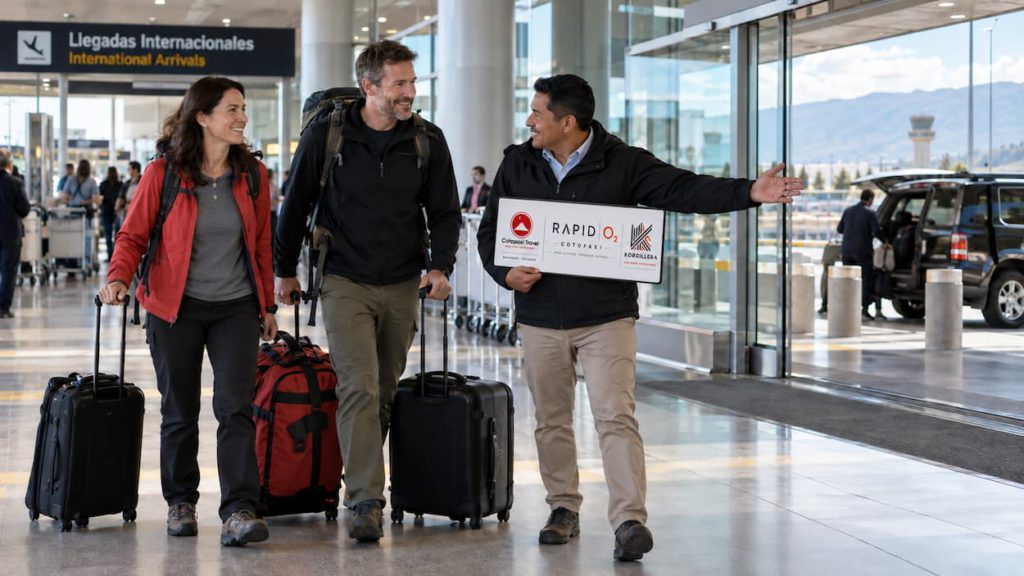
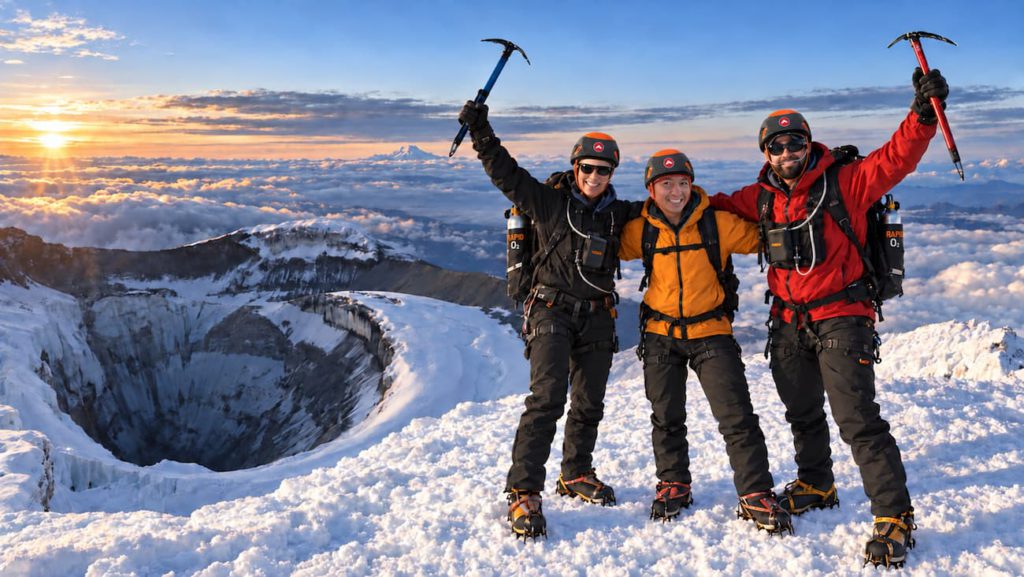
At 5,897 m / 19,347 ft, Cotopaxi is a serious high-altitude mountaineering objective. Physical fitness is important, but altitude, acclimatization, glacier conditions, weather and professional mountain judgment all play a major role.
This raises an important question for climbers:
Does supplemental oxygen help when climbing Cotopaxi?
The answer is yes—but oxygen should be understood as additional high-altitude support, not a replacement for acclimatization, fitness or mountaineering experience.
What Happens to Your Body at 5,897 m?
As altitude increases, atmospheric pressure decreases. This reduces the partial pressure of oxygen available to the body, making sustained physical effort progressively more demanding.
Cotopaxi illustrates this clearly:
| Location | Altitude |
| Quito | 2,850 m |
| Cotopaxi National Park | ~3,750 m |
| José Ribas Refuge | 4,864 m |
| Upper Cotopaxi | ~5,500 m |
| Cotopaxi Summit | 5,897 m |
This is why acclimatization remains one of the most important parts of preparing to climb Cotopaxi.
How Can Supplemental Oxygen Help on Cotopaxi?
Supplemental oxygen provides additional oxygen to the climber while operating in a low-pressure, high-altitude environment.
When incorporated into a professionally managed climbing strategy, oxygen can provide additional physiological support during the ascent.
But it does not make Cotopaxi easy.
It cannot replace:
- proper acclimatization;
- physical preparation;
- crampon and glacier skills;
- professional mountain guiding;
- safe turnaround decisions.
The principle is simple:
Supplemental oxygen supports the climber. It does not remove the mountain.
Does Oxygen Replace Acclimatization?
No.
Acclimatization is the body’s process of adapting to altitude over time. Supplemental oxygen provides additional oxygen while it is being used.
These are two different things.
Even when supplemental oxygen is planned for summit day, climbers still benefit from progressive altitude exposure before attempting 5,897 meters.
The Rapid O₂™ source program makes this distinction explicit: it compresses acclimatization; it does not eliminate it.
How Can Oxygen Be Used on Cotopaxi?
Supplemental oxygen should be treated as a planned system rather than emergency equipment carried without preparation.
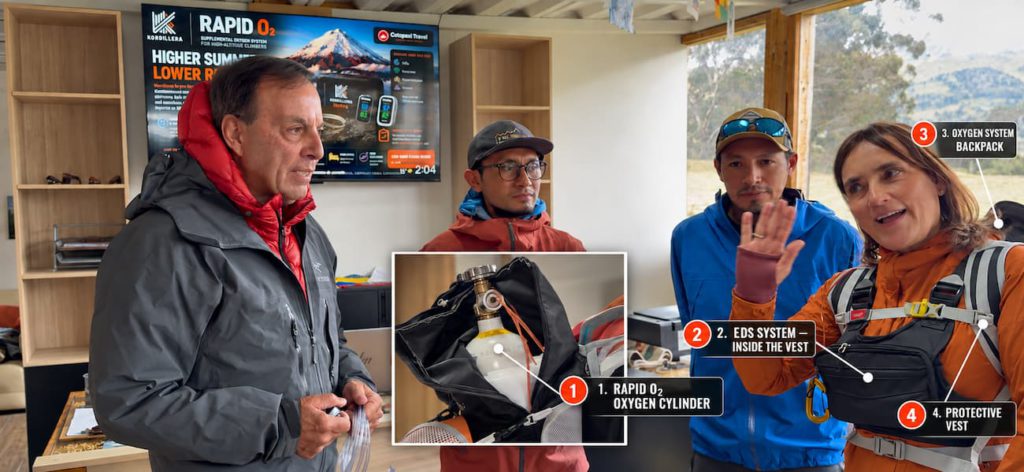
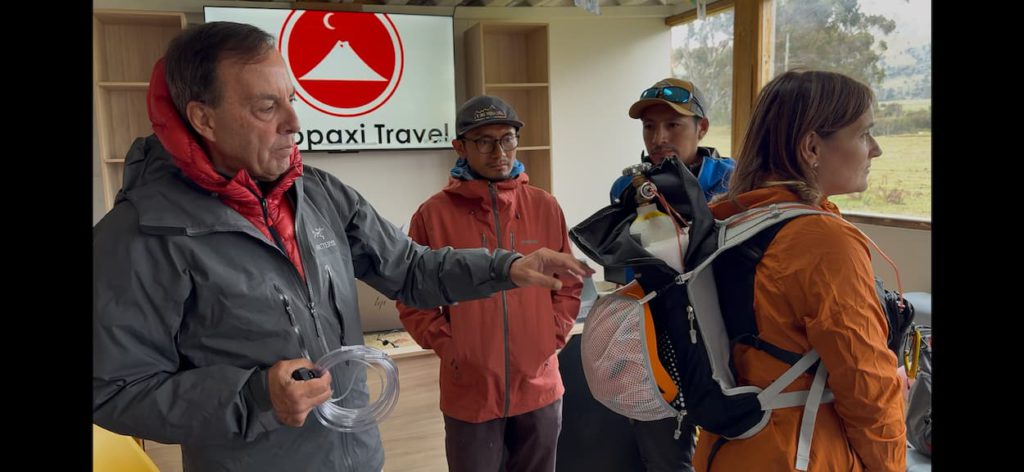
For example, the Rapid O₂™ protocol developed for Cotopaxi uses a dedicated oxygen cylinder for each climber. The equipment is individually fitted and rehearsed before summit night. Under that protocol, oxygen begins from the refuge using a nasal cannula, with a transition to a reservoir mask at approximately 5,500 m.
The important lesson is preparation:
A climber should understand and practice with the oxygen system before needing it at high altitude.
Does Supplemental Oxygen Prevent Altitude Sickness?
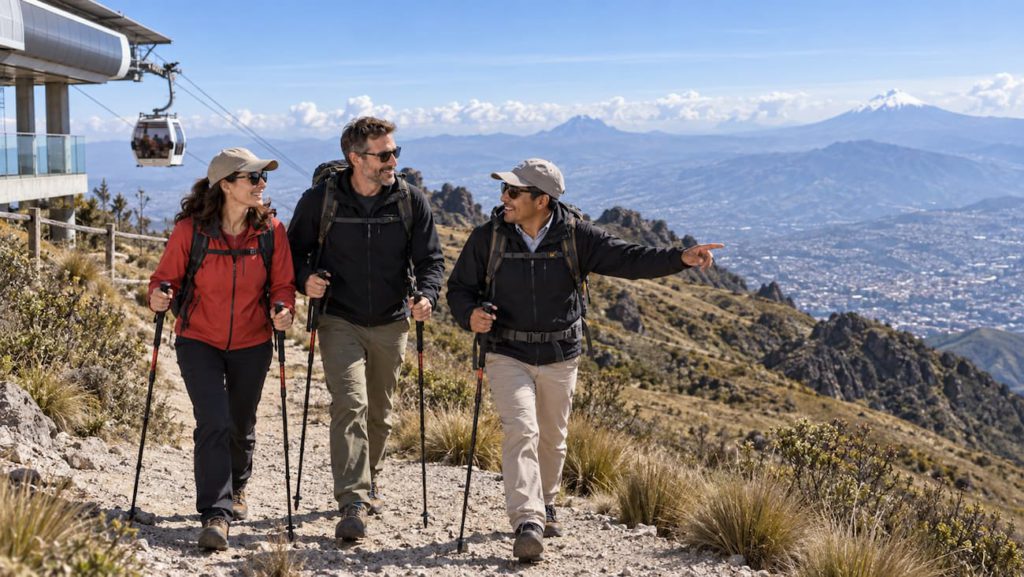
Supplemental oxygen should not be considered a guarantee against altitude illness.
Altitude symptoms still require attention, and oxygen should never be used as justification to ignore significant symptoms or continue climbing when descent is the safer decision.
Professional assessment and mountain judgment remain essential.
As the Rapid O₂™ program states:
Oxygen does not replace judgment.
Oxygen + Acclimatization + Professional Guiding
The most useful way to think about oxygen-assisted climbing is not oxygen versus acclimatization.
It is:
ACCLIMATIZATION + PHYSICAL PREPARATION + SUPPLEMENTAL OXYGEN + MONITORING + PROFESSIONAL GUIDING
All of these elements can work together.
Cotopaxi remains a glaciated 5,897-meter mountain, regardless of the technology being used.
So, Is Supplemental Oxygen Useful for Climbing Cotopaxi?
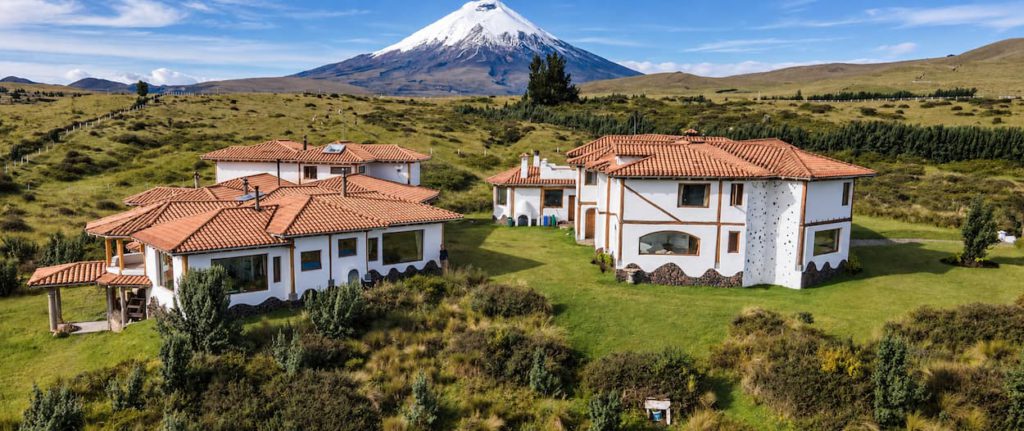
Yes, when it is properly integrated into a structured high-altitude climbing strategy.
Supplemental oxygen can provide additional support at altitude, but it does not replace acclimatization, experience, fitness or conservative mountain decisions.
That is the key difference between simply carrying oxygen and incorporating oxygen into a professionally managed high-altitude system.
For climbers interested in this approach, Cotopaxi Rapid Ascent O₂™ Expeditions integrates supplemental oxygen, progressive acclimatization, physiological monitoring and professional mountain support into a structured Cotopaxi climbing program.
Learn more about Cotopaxi Rapid Ascent O₂™ Expeditions →